Wednesday, May 20, 2020

Why China and India shouldn't let coronavirus justify walking back climate action

indah.link
While virus lockdowns have provided temporary blue skies from Delhi to Beijing, and beyond, as China and India prepare to resuscitate their economies experts warn doing so without environmental regard could wind back their previous good work on climate.
That could have devastating effects on the health on billions of people. Air pollution already kills 7 million of us every year, damages our children's health and development, causes serious breathing and lung problems, and even affects babies in the womb.
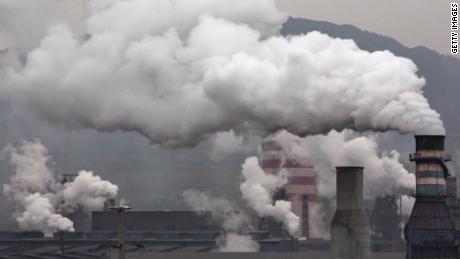
The pandemic isn't fixing climate change
Now climate experts are demanding countries use this recovery period to enact policies that reduce emissions and invest in renewable energy and climate-resilient infrastructure. That, they say, will create jobs, be better for the economy in the long term and, crucially, save lives.
Bailing out fossil fuel companies and funding high-carbon industries, by contrast, will set back the planet's chances of limiting global temperatures to within levels needed to stave off the worst of the climate catastrophe.
For Pulitzer Prize-winner Joseph Stiglitz, and a group of leading economists, this is a make or break moment.
"The recovery packages can either kill these two birds with one stone — setting the global economy on a pathway towards net-zero emissions — or lock us into a fossil system from which it will be nearly impossible to escape," they wrote earlier this month in the Oxford Review of Economic Policy.

Building green, climate resilient infrastructure

Before the virus hit, India had clear targets on climate change.
It had committed to having 40% of its power generation supplied by non-fossil fuels by 2030, and had increased its target for renewable energy capacity to 450 gigawatts by then, too.
Demand for coal — which generates about 75% of India's electricity — was down, as renewable energy became much cheaper, and on the world stage India had taken a lead in climate negotiations.
"Before pandemic hit the predictions were that India would surpass its targets," said Aparna Roy, associate fellow and co-lead on climate change and energy at the Centre for New Economic Diplomacy (CNED).
But the coronavirus lockdowns have wreaked huge economic disruption on India's economy. More than 120 million people lost their jobs in April, mostly informal laborers and small traders, according to the Centre for Monitoring the Indian Economy (CMIE).
To ease the economic pain, the Indian government last week unveiled $266 billion economic package aimed at building a "self-reliant India," according to Prime Minister Narendra Modi, and will help micro, small and medium-sized enterprises.
The details of that package are still being rolled out, but government support for energy efficiency upgrades for businesses and targets for decarbonizing as conditions on funds could go a long way, experts say.
"Fossil fuel industries, facing extraordinarily low oil prices, are likely to request future tax breaks or bailouts," the economists write in the Oxford University study. "While there may be good reasons for such support, such bailouts should be conditional on these industries developing a measurable plan of action to transition towards a net-zero emissions future."
Subsidies for fossil fuels in India were already over seven times larger than those for alternative energy, according to a report from two environmental think tanks found in April, highlighting an area where India has to do better.
The disruption from the virus could also impact whether India meets its renewable energy targets.
The country wants to be a leader in solar power and is aiming for 175 gigawatts of renewable energy by 2022, with the majority of that to come from solar. But construction on solar projects was halted during lockdown as the majority of the components needed for these installations come from China, where factories shut during the pandemic.
India also depends on international finance to help reach its climate goals — a pot that could dry up as developed nations struggle with their own economic hardships.
"Most developed countries that are already regressing from their commitments, this is an opportunity to not commit the further finance that is urgently required for developing countries to make their transition," Roy said.

India's development depends on green policies

India's long-term coronavirus recovery strategy could also determine how the country progresses not only with its clean energy transition but the health and development of its people.
India's ability to provide enough food and energy for its growing population hinges on building infrastructure that will withstand the impacts from the climate crisis, having a sustainable agriculture sector, and transitioning to renewable energy.
"The Covid pandemic has actually highlighted how important three things are: food security; sustainable, reliable and affordable energy access; and the third is critical infrastructure," Roy said. "Poverty alleviation will require India to have energy and food security, at the same time its energy and food security are very vulnerable to climate impact."
Those climate impacts are already being felt. Deadly heatwaves with temperatures above 50 degrees Celsius (122 Fahrenheit) are now the norm during summer. Erratic monsoon rains bring annual flooding that grind entire cities to a standstill, and disrupt the region's vital crop production. Pollution from factories, exhausts and crop burning choke India's cities every year, damaging the health of millions.
Adding to the urgency is that this nation of 1.3 billion people is the world's third-largest emitter of carbon dioxide. And those energy needs are expected to double over the next decade due to its rapidly growing population and economy.
Construction of roads, buildings and other infrastructure such as transport links will need to expand to keep up with the millions of people moving to cities.
And millions more still have no or poor access to electricity and use polluting fuels such as wood or kerosene for cooking and lighting. The challenge over the next decade will be how to rapidly expand energy access, and sustainably develop the agriculture sector — which hundreds of millions of people in India depend on for their livelihoods — while not increasing emissions and pollution.
Having a coronavirus recovery strategy that builds green infrastructure, reduces emissions and ramps up renewable energy capacity and production is therefore a huge opportunity for India.
"How India meets its development trajectory and meets the energy transition is very important. India has the opportunity to create the kind of a model that it can export to other developing nations," Roy said.

Coal is a crucial area for China after Covid

Before the pandemic, China was on track to achieve most of its climate commitments — which included a peak in carbon emissions by 2030, and a 20% share of renewable energy in its primary energy demand. It had also made big strides in reducing pollution in its cities, with Beijing now out of the world's top 100 most polluted.
In recent years, China had become the world's largest developer of renewable energy, and dramatically reduced the price of solar power.
But Covid-19 has shrunk China's economy into its worst three-month period in decades. Some 80 million Chinese may already be out of work and experts say it will be a long road to recovery.
"There will be major pressures in China to stimulate the economy and keep people employed, and China's coal industry still a huge employer," said Joanna Lewis, associate professor of energy and environment and an expert on China's clean energy at Georgetown University.
China is the world's largest producer and consumer of coal and there is evidence that China is relaxing restrictions around fossil fuel, signaling a possible move to use coal to boost the country's coronavirus-hit economy.
In the first few weeks of March, more coal-fired capacity was permitted for construction in China than in all of 2019, according to the Global Energy Monitor.
Construction of plants could give an economic boost in the short term. But in the long-term coal is generally unprofitable — research by Carbon Tracker found that 40% of China's coal plants are losing money.
"Even if renewables are technically cheaper at this point, they will have to complete against a coal industry being supported by government programs to reduce output, push up prices and guarantee output contracts," Lewis said.
It may talk a green talk, but carbon emissions have been rising in China over the past few years as its economy slowed.
"Even before the outbreak we saw backsliding in commitments to slow coal growth, with increasing demand in 2019 after years of slowing growth," said Lewis.
Eyes will be on China's biggest annual political meeting, the National People's Congress (NPC), which kicks off on May 22 after being delayed because of the virus. The sessions unveil key economic targets and budgets — and measures to revive the economy after coronavirus will be center stage.
Observers will be keen to see how much climate policy will be on the agenda.
Lewis said a green economic package would be a "huge opportunity to capitalize on the last decade of progress it has made in pushing forward clean energy innovation and deployment and ensure the low carbon transition can continue."
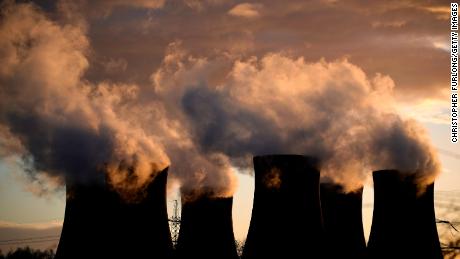
The world is coming together to fight coronavirus. It can do the same for the climate crisis
Importantly, China is drafting its 14th Five Year Plan — a roadmap of the country's goals and a key indicator of how much clean energy and sustainable development will be a focus in the next five years. Because China is the world's biggest polluter, the document's climate policy is hugely important.
"The technologies China should be investing in are different from where they instead a decade ago," Lewis said. "Rather than investing in wind power technology, for example, more investment in battery technology would not only enable further deployment of EVs (electric vehicles) but can help to balance a grid that is relying on more and more renewable energy."
China leads the world in deployment of electric vehicles. At the end of June 2019, 45% of the electric cars and almost all electric buses were in China.
A report by China Briefing said the country's recovery strategy will likely push it toward a "sustainable and technology-driven economic model" with investments in "new infrastructure" such as big data centers, 5G, and charging stations for new energy vehicles.
At the United Nations Climate Change Conference (COP 26) — postponed until next year because of the virus — China and India are expected to update their climate commitments, along with other countries. What they do during this recovery time will have ramifications for global climate action.
Lewis said coordination between China and the United States — the world's second-biggest polluter — should be a "crucial element of US-China engagement going forward."
Without it, she said: "We risk valuable global action being taken during this next decade, which is no doubt the decisive decade for climate change."


Let's block ads! (Why?)

WHO reports biggest single-day jump in global cases

indah.link
The USS Theodore Roosevelt docked at Naval Base Guam in Apra Harbor on April 27.
The USS Theodore Roosevelt docked at Naval Base Guam in Apra Harbor on April 27. Credit: Tony Azios/AFP via Getty Images

The USS Theodore Roosevelt has returned to sea, after being docked in Guam for weeks due to a coronavirus outbreak onboard in March.  

The US Navy announced the aircraft carrier left Guam today and entered the Philippine Sea to conduct carrier qualifications.

Onboard outbreak: More than 1,000 of the ship’s nearly 4,900-member crew tested positive for Covid-19. After evacuating some 4,000 sailors from the ship to Guam, the US Navy had been returning sailors following a period of quarantine and isolation in the hopes of getting the aircraft carrier to sea as soon as possible.

“After cleaning the entire ship from bow to stern, the appropriate number of crewmembers to operate the ship underway have returned from quarantine after passing rigorous return-to-work criteria,” the Navy said in a news release.

The release added that they were bringing fewer sailors onboard, which would help increase social distancing.

New measures: All sailors onboard have taken required lessons on virus prevention and mitigation, and practiced simulation emergency procedures while executing measures like wearing masks, said the release.

Other virus prevention measures include adjusted meal hours, sanitizing spaces, minimizing in-person meetings, and a simulated medevac.

"It was an unprecedented challenge to get to this point and I'm proud of the Rough Rider Team's tenacity and resiliency in the face of uncertainty," said Capt. Carlos Sardiello, the ship's commanding officer.

Let's block ads! (Why?)

Boy chosen as the Panchen Lama disappeared in 1995. China says he's now a college grad with a job

indah.link
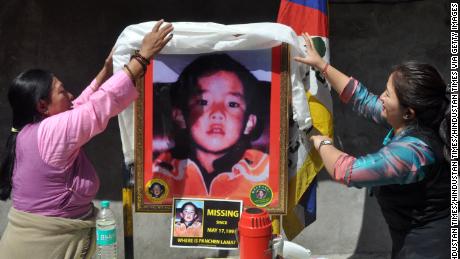
Gedhun Choekyi Nyima has never been heard from since, but on Tuesday, China said he was a college graduate with a job, and that neither he nor his family wished to be disturbed in their "current normal lives."
The brief comments, made by Chinese Foreign Ministry Spokesperson Zhao Lijian during a regular press briefing, offer a rare window into the apparent life of the now 31-year-old.
Gedhun Choekyi Nyima was identified by the Dalai Lama, the Tibetan spiritual leader, as the 11th Panchen Lama in 1995, six years after the death of his predecessor. But Beijing rejected him and quickly put forward its own candidate, Gyancain Norbu, who the Chinese government claims is the "real" Panchen Lama.
Two women place a ceremonial scarf above a portrait showing the last know image of Gedhun Choekyi Nyima, in Mcleodganj near Dharamsala, India, on April 25, 2017.
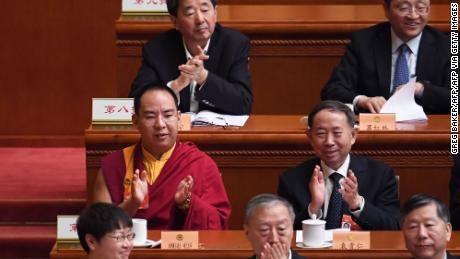
By installing its own choice as the Panchen Lama and disappearing Gedhun Choekyi Nyima, China avoided him becoming another prominent opposition figure in the mold of the Dalai Lama, who has lived in exile since fleeing Beijing-controlled Tibet in 1959 and is regularly denounced by Chinese authorities and blamed for any Tibetan unrest in China. Since becoming an adult, Gyancain Norbu has occupied an increasingly high profile role, joining a top Chinese political body and often appearing at important events in Beijing.
It remains unknown whether Gedhun Choekyi Nyima is aware of his being chosen as the Panchen Lama. In a statement this week marking the 25th anniversary of his disappearance, the Tibetan government in exile said that "China's abduction of the Panchen Lama and forcible denial of his religious identity and the right to practice in his monastery is not only a violation of religious freedom but also a gross violation of human rights."
US Secretary of State Mike Pompeo also denounced "China's persecution" of Gedhun Choekyi Nyima and called on Beijing to "make public the Panchen Lama's whereabouts" and respect Tibetans' freedom of religion.
The Chinese government-selected 11th Panchen Lama Gyaincain Norbu (middle row left) applauds during a plenary session of the Chinese People's Political Consultative Conference in Beijing on March 10, 2019.
The most important purpose of the Panchen Lama from Beijing's perspective is the role he traditionally plays in identifying the reincarnation of the Dalai Lama, revered as a living god by Tibetan Buddhists. With the current holder of that title, Tenzin Gyatso, now 84, there's a strong chance that a successor will be needed sooner rather than later.
Beijing has made it clear for years that it intends to control that process, bringing the top two figures in Tibetan Buddhism under its control. "Reincarnation of living Buddhas, including the Dalai Lama, must comply with Chinese laws and regulations and follow religious rituals and historical conventions," a representative of the officially-atheist state said last year when the Dalai Lama was hospitalized with a chest infection.
A law passed in 2007 states that the reincarnation of a living Buddha is "subject to an application for approval."
For his part, the current Dalai Lama has said his successor could be found outside Tibet, and also suggested he may not reincarnate at all, making him the last person to hold that title. In recent years, he has moved to secularize the Tibetan government in exile, ceding non-religious authority to political figures, a stark contrast to the theocratic society once ruled over in Tibet by his predecessors.
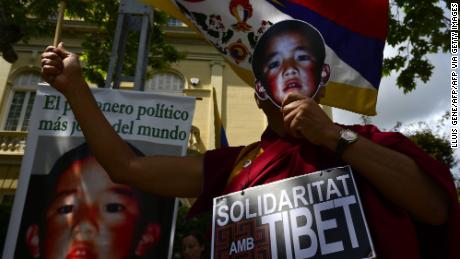
Pro-Tibetan protestors hold picures of Gendun Cheokyi Nyima (recognized by the Dalai Lama as the 11th Panchen Lama) during a demonstration outside the Chinese consulate in Barcelona on May 17, 2013.
In 2011, the Dalai Lama denounced the Chinese government's attempt at meddling, saying "the person who reincarnates has sole legitimate authority over where and how he or she takes rebirth and how that reincarnation is to be recognized."
"It is a reality that no one else can force the person concerned, or manipulate him or her," the Dalai Lama said. "It is particularly inappropriate for Chinese communists, who explicitly reject even the idea of past and future lives, let alone the concept of reincarnate Tulkus, to meddle in the system of reincarnation and especially the reincarnations of the Dalai Lamas and Panchen Lamas."
Regardless of what the Dalai Lama decides, however, many observers expect that a successor will be put forward, certainly by Beijing and likely by the Tibetan exile community, creating a situation akin to that of the two Panchen Lamas and worsening the divide over who gets to shape the future of Tibetan Buddhism.

Let's block ads! (Why?)

Brazil hits record high for new coronavirus cases

indah.link
The country's health ministry reported 19,951 new cases in the previous 24 hours, bringing the total to 291,579 confirmed cases.
This new surge tops the previous record set Tuesday. Reported deaths caused by coronavirus also increased by 888 on Wednesday, bringing to the country's total to 18,859 deaths, the ministry said.
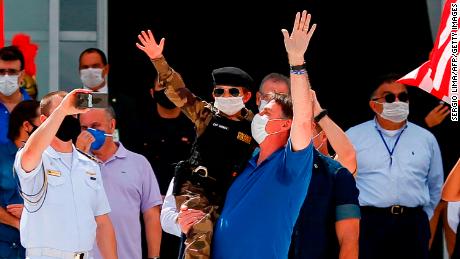
As hospitals in Brazil teeter on the brink of collapse, Bolsonaro does pushups with supporters
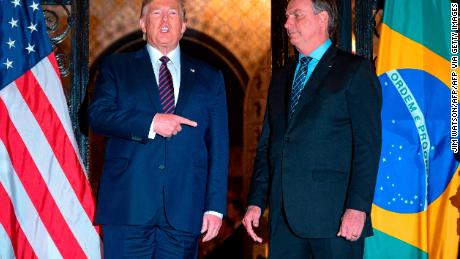
Asked about Brazil's skyrocketing numbers on Tuesday, US President Donald Trump said that he was mulling a travel ban on Brazil.
"We are considering it," Trump said, adding: "We hope that we're not going to have a problem. The governor of Florida is doing very, very well testing -- in particular Florida, because a big majority come in to Florida. Brazil has gone more or less herd, and they're having problems.
"I worry about everything, I don't want people coming in here and infecting our people," Trump said, "I don't want people over there sick, either."
Amid the spiraling health crisis, Brazil's lower house of Congress has approved a proposed law that would make use the use of personal protection masks in public spaces mandatory.
The proposed law would require people to wear any form of face covering in areas that are accessible to the public, including parks, sidewalks, public transportation and even private buildings where there is a high level of foot traffic. Individuals not wearing masks would be fined up to $52.
The proposal needs approval by the Senate and Brazilian President Jair Bolsonaro, who rarely wears facial coverings. It is unclear when the Senate vote will happen.

Health system on the brink

Brazil's alarming numbers come days after Sao Paulo's mayor warned that its health system could be overwhelmed very soon if residents don't follow social distancing guidelines. Officials in the major city of 12 million have declared a five-day holiday in a bid to get residents to stay home.
By Monday, Brazil achieved the grim record of having the third-highest number of coronavirus cases in the world, behind the United States and Russia.
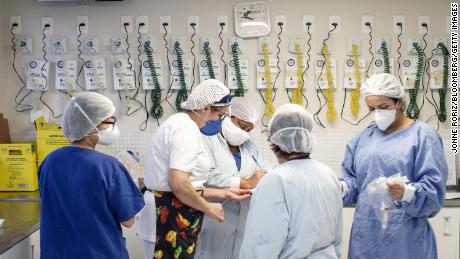
Doctors and nurses work in the Covid-19 intensive care unit at the Emilio Ribas Institute of Infectious Disease hospital in Sao Paulo.
Yet Bolsonaro continues to dismiss the threat of the virus, saying quarantines and lockdowns could have a worse impact on Brazil's economy.
He has repeatedly dismissed Covid-19 as a "little flu" and urged businesses to reopen, even as many governors scramble to implement social isolation measures and slow the spread.
The country lost its second health minister in a month last week. Nelson Teich stepped down after clashing with Bolsonaro over the country's coronavirus strategy. In April, Bolsonaro fired his predecessor, Luiz Henrique Mandetta, after a prolonged standoff.
Bolsonaro's March visit with Trump was a 'corona trip,' says Brazil's former health secretary
Teich clashed with Bolsonaro over the use of malaria drugs to treat the virus and social isolation measures.
Despite the political crisis, the populist leader continues to tout chloroquine as a potential wonder drug against the new coronavirus -- like his US counterpart Trump -- even though it is an unproven treatment for Covid-19.
Bolsonaro tweeted on Wednesday that there will be new guidelines to expand the use of chloroquine.
"Today we will have a new protocol on chloroquine" issued by the Ministry of Health, Bolsonaro wrote, calling it "a hope, according to the many who have used it."
Brazil's medical authority approved the use of hydroxychloroquine -- which has been described as the less toxic derivative of chloroquine -- in April in serious cases of coronavirus if the doctor and patient agree. Bolsonaro has since pushed for approval to use the drug in less serious cases.
It follows Trump's claim on Monday that he is taking daily doses of hydroxychloroquine, even though medical experts, the US Food and Drug Administration and at least one study have questioned its efficacy and warn of potentially harmful side effects.

Let's block ads! (Why?)

Huawei says its operating system can rival Google, Apple — but experts say it might be a struggle

indah.link

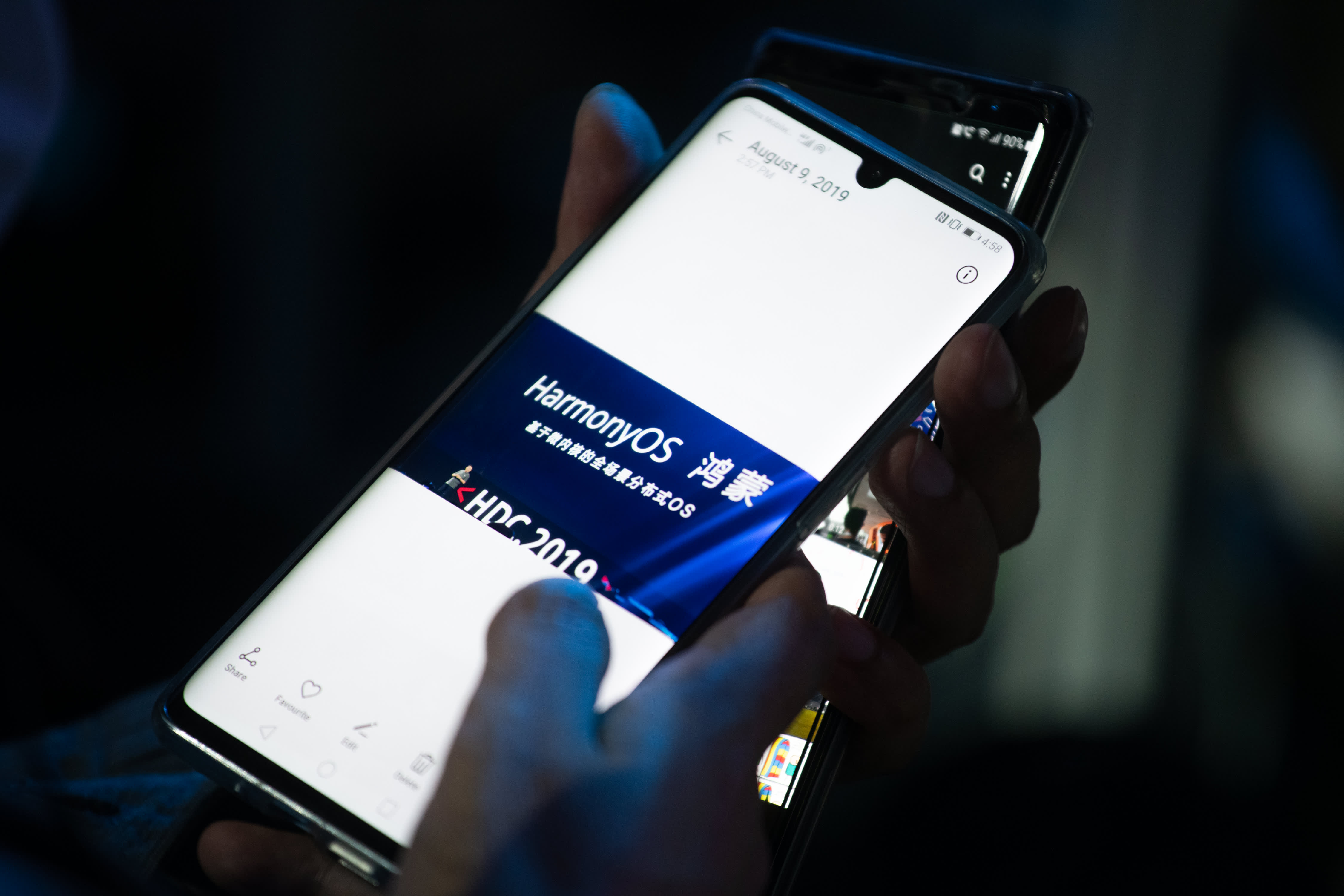
A guest holds her phone showing a picture taken during Huawei's press conference unveiling its new HarmonyOS operating system in Dongguan, Guangdong province on August 9, 2019.

Fred Dufour | AFP| Getty Images

A top Huawei executive said the Chinese company's mobile operating system is able to compete with Google and Apple — but analysts told CNBC that might be tough to achieve, especially in markets outside China where U.S. technology giants have a strong foothold.

"Huawei is in a position to deliver an ecosystem that is on par with Google's and Apple's ecosystems," Huawei's vice president of consumer cloud services in its consumer business, Eric Tan, said on Tuesday. "We have the confidence to be one of the top ecosystem developers in the world." 

He was speaking about the company's own operating system, called the HarmonyOS, which was launched in August.

It comes as the Chinese technology giant attempts to forge a path ahead without American technology. 

Huawei's smartphones have relied on Google's Android operating system for a number of years. But in 2019, the Chinese firm was put on a U.S. blacklist which restricted its access to American technology and meant it was no longer able to use licensed Android software on its handsets.

In response, Huawei launched its own operating system that same year.

On Tuesday, Huawei executives spoke about HarmonyOS, playing up its ability to be an operating system that can work across a number of devices rather than just smartphones alone, which could appeal to developers looking to make apps that work on different hardware.

The management also talked about the Huawei Mobile Services (HMS), a collection of various Huawei apps from maps to payments to its app store. 

Huawei's claim about being able to deliver an ecosystem "on par" with Google's and Apple's is a big one, considering the company only launched its operating system less than a year ago.

But Tan backed up his comments by revealing that by the end of March, Huawei had 1.4 million developers on board — up 115% from the end of the first quarter of 2019. 

In China, where Huawei is the biggest smartphone maker by market share, not having access to Google's Android is not a huge problem. That's because Google services, such as search, are blocked in the country and users can't really use them anyway. That also means Huawei's HarmonyOS has a chance of being successful in the domestic market. 

So overall without marquee developers on board its going to be a tough sell.

Neil Shah

Counterpoint Research

However, in international markets where apps are built on Google's services — integrating maps or payments, for example — Huawei could find its HarmonyOS a tough sell.

"It won't be easy for Huawei to build up a library of premier applications outside of China, as many of them rely on Google for things like digital rights management, location, payment, and notification services," Bryan Ma, vice president of devices research at IDC, told CNBC.

Huawei was not immediately available for comment when contacted by CNBC.

"Developers oftentimes have to be selective on which projects they spend their time on, and a key factor in that decision-making is whether there is enough of a critical mass in the user base to justify the time and effort spent in porting applications over," Ma said.

Huawei's HMS is similar to Google Mobile Services and offers developers kits that can be used to integrate things like location services into apps. The Chinese firm said there are 60,000 apps using so-called HMS Core services, but it did not break down what countries or regions those are in. 

Neil Shah, research director at Counterpoint Research, called the number of apps "limited" and said Huawei is still missing major apps. 

"Outside of China, it will be struggle as most of the marquee applications come from big profile U.S. developers — Netflix, Facebook properties (Instagram, WhatsApp), Google apps, etc — which are obviously banned to collaborate with Huawei," Shah said.

"So overall, without marquee developers on board, it's going to be a tough sell."

Indeed, a number of major apps that are important in international markets are not on Huawei's app store, called the AppGallery. Users cannot download any Google apps or Facebook-owned services. Netflix or Spotify are not available either. 

However, it does have the Amazon Shopping app, as well as video-sharing app TikTok, which is owned by Chinese firm ByteDance. 

Huawei has expressed its desire to get Google apps onto the AppGallery.

"We hope Google services can be available through our AppGallery, just like how Google services are available through Apple's App Store," Eric Xu, rotating chairman at Huawei said in an interview with CNBC in March

But this will be a challenge, according to Ma. 

"Legal considerations aside, I find it highly unlikely that Google would publish its own apps into the AppGallery, as they have the same hooks into its services as third parties do. And if anything, they want to drive usage of their services," he said.

Let's block ads! (Why?)

Tuesday, May 19, 2020

CNN anchor wants you to hear this quote from Trump

indah.link

[unable to retrieve full-text content]

CNN's Chris Cuomo argues that President Trump doesn't like coronavirus testing, tracing or masks because they may make people "less pumped to reopen recklessly."

Why Apple is unlikely to face backlash from China over new U.S. rule on Huawei

indah.link

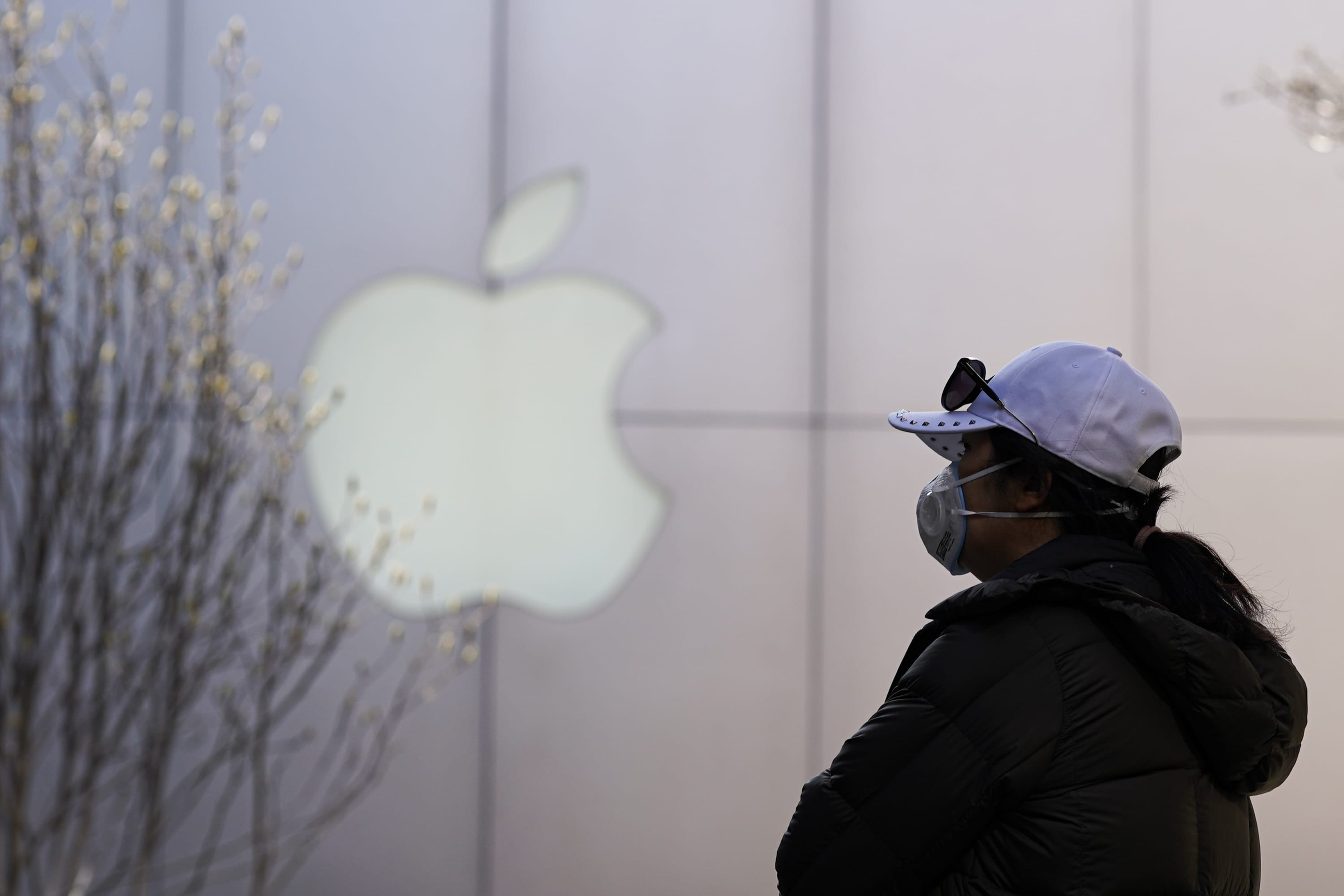
People wearing face masks walk past an Apple store in Beijing on March 17, 2020 in Beijing, China.

Fred Lee | Getty Images

Apple is unlikely to face backlash from the Chinese government over a new U.S. rule designed to target Huawei, experts told CNBC, despite threats from state-backed media. 

The iPhone maker has a good relationship with Beijing and, indirectly via its manufacturing partners, employs hundreds of thousands of workers in the world's second-largest economy, factors that could dissuade China from taking action against the company. 

On Friday, the U.S. moved to cut off chip supplies to Huawei with a rule that requires foreign firms using American software or equipment for manufacturing chips to sell to the Chinese giant, to get a license. That will hit Taiwan's TSMC, Huawei's main supplier of chips, and it could deal a big blow to the networking equipment maker, experts told CNBC

In response, China is ready to take "countermeasures," according to the state-backed Global Times citing a "source close to the Chinese government." 

The publication, which is often regarded as being close to the Chinese Communist Party, said these measures could include putting some companies on a so-called "unreliable entity list." It's unclear what this list entails as it has not been published. But it was something floated by China last year after Huawei was thrown on a U.S. blacklist known as the Entity List.

Other measures could include "imposing restrictions on or launching investigations into U.S. companies like Qualcomm, Cisco and Apple according to Chinese laws and regulations like Cybersecurity Review Measures and Anti-monopoly Law," the Global Times said. 

Apple and Cisco declined to comment. Qualcomm was not immediately available for comment when contacted by CNBC. 

Risks to China supply chain, jobs

The iPhone maker is one of the few U.S. technology firms that has found success in China over the past few years, with sales from the Greater China region accounting for around 16% of sales in the March quarter. 

But China is not only critical for revenue. It's also where most iPhones are assembled by its manufacturing partner Foxconn and the country is a critical part of Apple's supply chain. Foxconn employs hundreds of thousands of people in China. 

While moving production outside of China is not an easy task, American technology firms including Apple are looking at other countries such as India and Vietnam. Last year, Apple was reportedly looking to start a trial for the production of its AirPods in Vietnam and asked suppliers to look into moving 15% to 30% of production from China to Southeast Asia

China may not want to risk accelerating this move. 

"China is already facing headwinds as companies such as Apple look to diversify their manufacturing base," Neil Shah, research director at Counterpoint Research, told CNBC. "So it could be a double whammy if China targets Apple in China and indirectly Foxconn, it would further accelerate the manufacturing to outside of China."

Meanwhile, Apple has 42 stores in China and multiple partners that distribute its product. On top of that, Apple said last year that it has 2.5 million developers on its platform. Since the App Store launched in China in 2010, developers have earned more than 200 billion yuan ($28.1 billion). 

"Apple has huge direct and indirect contribution to the Chinese economy. So Beijing will have to think twice before targeting Apple," Shah said. 

Relationship with Beijing

Apple has also forged a good relationship with authorities in Beijing, according to Paul Triolo, head of Eurasia Group's geotechnology practice. 

"We do not think Beijing will go after Apple. There could be some brand boycott efforts, but not major moves against high profile companies like Apple that have very good relationships with local governments and Beijing," Triolo told CNBC.

It's not the first time Apple has been caught in the middle of a battle between Washington and Huawei. Last year, after Huawei as put on the U.S. Entity List in May, some social media citizens in China rallied behind the company and said they would no longer buy Apple products. But that social media backlash didn't appear to have a huge effect on the company. 

Indeed, Apple has to be very careful how it operates in China, where there is heavy censorship. Authorities often ask companies to comply with removal requests of content that the government does not like.

Last year, Apple removed a mapping app from its App Store that was used by anti-government protesters in Hong Kong after Chinese state media ran a piece headlined: "Is Apple helping HK rioters engage in more violence?" The protest movement in Hong Kong is aimed at pushing back against the perceived growing influence of China on the special administrative region. 

Apple said at the time that it removed the mapping app because it "has been used in ways that endanger law enforcement and residents in Hong Kong" and has been "used to target and ambush police."

And in 2017, the company removed several virtual private network (VPN) apps from it Chinese App Store. VPNs are required to access sites that are blocked in China such as Google and Facebook. 

The company has been criticized in the past for some of these actions. Last year, a group of bipartisan U.S. lawmakers penned an open letter raising their concerns about Apple's removal of the Hong Kong app.

So what will China do?

Instead of going after Apple in a big way, Beijing could target other firms.

"Based on what Chinese officials have been saying, at a minimum there will likely be investigations of U.S. companies for anti-monopoly behavior and for compliance with the provisions of the cybersecurity law. But this gives Beijing a lot of flexibility in terms of reacting to satisfy Chinese social media activists demanding a strong response, but not further poisoning the business environment in China for foreign, particularly U.S. firms," Triolo said. 

"The companies most likely to be included on the unreliable entities list and targeted for some action are those already subject to some market access limitations and that Beijing sees as sufficient symbolic to show strong anger over the move, without engendering a major response from the business community, further supply chain movement out of China, etc." 

Let's block ads! (Why?)

Trump calls US coronavirus numbers a 'badge of honor'

indah.link

Doctors warned today that inflammation is causing the severe effects of Covid-19 disease in patients, and said reducing those effects may be key to helping people get better.

Teams across the US are testing a variety of immune-modulating drugs often prescribed for conditions such as rheumatoid arthritis and cancer, Dr. Vincent Marconi of the Emory University School of Medicine told a briefing organized by the Centers for Disease Control and Prevention.

Marconi described more than a dozen drugs that are being tried out in severely ill Covid-19 patients. Various drugs attack inflammation from different angles and might tamp down the so-called cytokine storm that appears to be causing the worst damage in advanced patients, Marconi said.

They include sarilumab, sold under the brand name Kevzara, to treat rheumatoid arthritis; adalimumab, or Humira, also a rheumatoid arthritis drug; siltuximab, or Sylvant, used to treat cancer; and others.

The stages of symptom severity: Marconi said a three-stage process takes patients from mild disease to extreme symptoms that affect the whole body, and said inflammation underlies the most serious stage.

Many people infected with Covid-19 may not have any symptoms, and most have mild symptoms. Marconi said the mild stage has common symptoms, including a dry cough, fever and a headache.

“The vast majority of individuals will recover at this point and will not progress to the pulmonary phase,” he said. That second phase is marked by lung inflammation and trouble breathing.

After that, patients can get worse quickly. That’s when doctors see symptoms of shock, acute respiratory distress syndrome, and the “terrible” clotting problems that cause organ damage, blockages and strokes. 

Let's block ads! (Why?)

China stocks up food and oil supplies as coronavirus spurs fears about shortages

indah.link

A customer wearing face mask buys flour at a supermarket on May 12, 2020 in Taiyuan, Shanxi Province of China.

Zhang Yun | China News Service | Getty Images

China has been building up its food and energy stockpile this year, taking advantage of slumping crude oil prices even before the coronavirus pandemic disrupted supplies.

The world's second largest economy, which has limited arable land, is facing pressure to shore up its food supplies as prices for food started ticking higher last year, prior to the virus outbreak.

Lockdowns and movement restrictions aimed at containing the coronavirus have triggered transportation and logistics bottlenecks.

Those blockages have highlighted the vulnerability of global supply chains, and fears of food shortages have come to the forefront of countries, both in developed and emerging economies.

Fear is a powerful motivator. It's driving policy in China currently. Fits well with those hardliners that want to rebuild food reserves.

Arlan Suderman

chief commodities economist at INTL FCStone

Consumers in China are worried about further repercussions from the pandemic as it continues to spread globally.

"People there (in China) are panicked that coronavirus will eventually shut down the world's ports, making it impossible for them to import," said Arlan Suderman, chief commodities economist for INTL FCStone in a tweet on Monday. "As such, they are hoarding supplies now while they are cheap and available."


"Fear is a powerful motivator. It's driving policy in China currently. Fits well with those hardliners that want to rebuild food reserves," he added.

Food prices surge

China is the world's largest consumer of pork, a staple protein for the country.

In the first four months of the year, meat imports in China rose 82% compared to a year ago. These include pork, beef and poultry.

"We expect food stockpiling to continue especially in cities exposed to logistic disruption. The confluence of expected food price increases alongside an economic contraction and rising unemployment will push up the risk of civil unrest," said Kaho Yu, senior Asia risk analyst at Verisk Maplecroft, a consultancy.

Already, food inflation in the country has been ticking higher.

Last Tuesday, China announced that food prices rose 14.8% in April from a year ago. Even though it was lower than the 18% increase in March, it was still at a high level.

Pork prices rose almost 97% in April in what has been a persistent trend since early 2019 due to the African swine fever epidemic in pigs that decimated China's hog herds.

In comparison, non-food prices rose just 0.4% in April, official government data showed.

A worker inspects chickens at a poultry farm in Beijing, China.
Hundreds of millions of chickens at risk of being wiped out with much of China locked down due to virus

Soybean supplies are particularly vulnerable to supply shocks as China, the top importer of the commodity, needs the oilseed to make animal feed and cooking oil.

In April, China's soybean imports fell 12% from a year earlier, customs data showed, due to bad weather causing the delay of cargoes from top supplier Brazil.

As for rice, China is the world's largest producer of the staple grain with most of its supplies being consumed domestically.

Even so, concerns about food security of the staple grain have led to panic buying and spurred the state to acquire more stocks from the market for its national reserve.

In April, Chinese authorities assured the population that it was stepping up state buying of rice and that there were enough stocks, state news agency Xinhua reported.

"We expect China to continue stockpiling crops to ensure sufficient supply over the next six months by scouring the globe for available supplies," said Yu in a recent report.

The consultancy puts China in its "high risk" category in terms of food import security, which means that its food imports risk being subjected to disruption.

Crude oil reserve building

Likewise, China has been building up its crude oil stockpile, and went on a buying spree in the first quarter of this year, data show.

Although crude oil imports fell in April compared to a year ago, they still rose from March. But analysts say limited storage facilities could put a cap on imports.

China is expected to continue importing crude to fill its reserves taking advantage of lower oil prices.

Lei Sun

senior consultant at Wood Mackenzie

"Major crude oil importers such as China have been known to build their strategic reserves when prices are low, as seen in previous oil price routs," Lei Sun, senior consultant at Wood Mackenzie, said in a March report. "China is expected to continue importing crude to fill its reserves taking advantage of lower oil prices." 

However, the country has less room to import than it did in the last two years, due to limitations in storage capacity, he said.

As supply lines continue to be disrupted due to the coronavirus outbreak, Yu at Verisk Maplecroft said he expects Beijing to double down on building more storage capacity, on top of energy development at home.

"Energy is also core to the country's economic engine. Throughout the pandemic, Beijing has been prioritising maintaining a stable coal supply with an eye on power generation for industrial activities," said Yu. "We also expect Beijing to speed up the resumption of large scale energy infrastructure projects."

Putting food and energy first

Food and energy security have always been important for China, but the pandemic has underscored these concerns.

In April, President Xi Jinping spoke about food and energy supply security several times, noted Yu.

In the same month, state agencies — such as China's National Development and Reform Commission, the National Food and Strategic Reserves Administration and other ministries — issued a policy notice aimed at ensuring adequate food production, storage capacity and logistics, Yu noted. 

Also in April, China's National Energy Agency issued a list of policy areas to focus on this year. They included power supply, grid networks, oil and gas infrastructure, and coal projects.

The developments underscored the government's concerns, he said.

"Both Xi's rhetoric and associated policy announcements from various ministries show how food and energy security are high on the government's agenda," said Yu.

"All of them are aiming to avoid potential pandemic-linked supply shortages and to increase self-sufficiency of critical resources over the long term. The COVID-19's disruption on trade and industrial activities has reignited Chinese leadership's long-running concerns over resource security."

Let's block ads! (Why?)

As China faces a blacklash in the West, Xi needs Africa more than ever

indah.link
With the traditional big donors to Africa, such as Europe and the United States, focused on containing the continued spread of the virus, Xi moved to position China, which has its own outbreak largely under control, as the global leader in health.
At the gathering of World Health Organization (WHO) member states, Xi pledged to give $2 billion to the WHO over the next two years to assist developing economies -- and reminded Africa that its long relationship with Beijing had seen Chinese aid help treat 200 million Africans over the past seven decades.
Xi committed to helping 30 hospitals in Africa, setting up a pan-African health authority on the continent and supporting an affordable vaccine there, once one has been found.
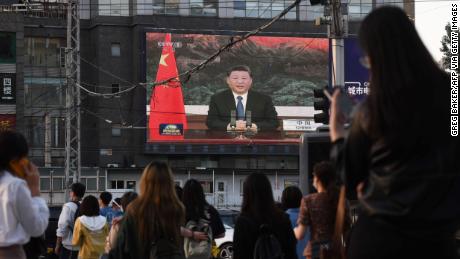
Chinese President Xi Jinping speaking via video link to the World Health Assembly, on a giant screen beside a street in Beijing on May 18, 2020.
But Xi's offerings weren't just about taking the lead in Africa: they were about securing support at a critical and precarious juncture in Beijing's relationship with the continent.
While no African head of state has yet publicly criticized China's response to the virus, earlier this week the African group backed a European Union-drafted resolution co-signed by more than 100 countries calling for an independent inquiry into the coronavirus pandemic.
That comes after African ambassadors last month wrote an unprecedented joint letter to Beijing demanding answers for the mistreatment of African residents in China during the coronavirus crisis.
As the coronavirus leaves China increasingly isolated on the world stage, Xi's speech made it clear how vital the support of African nations is to Beijing.

Important diplomatic allies

China's diplomatic ties with African nations stretch back to the mid-20th century when Beijing befriended newly independent countries as it tried to position itself as leader of the developing world, and counter US and USSR influence during the Cold War era.
Since then, Africa has proved to be a critical diplomatic bloc for Beijing -- the bid by the People's Republic of China (PRC) bid to expel the Republic of China (Taiwan) from the United Nations Security Council in 1971 succeeded largely because of the support of Africa, which provided 26 of the 76 votes it needed to win. That move allowed the PRC to take Taiwan's position both on the General Assembly and as one of the five permanent members of the Security Council.
In subsequent decades, when China has faced fierce criticism from the West, African countries have continued to stand beside Beijing.
After the Tiananmen Square crackdown, China succeeding in persuading several African countries to sign an agreement saying the clashes, in which Chinese troops fired on and killed civilians, "permitted no foreign interference.
As Western nations threatened to boycott Beijing's 2008 Olympic Games over concerns of human rights abuses in China, African countries continued to support the event.
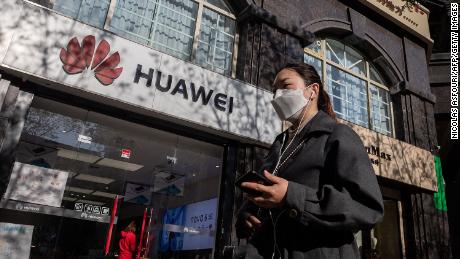
A woman wearing a face mask amid concerns over the Covid-19 coronavirus walks holding her smartphone past a Huawei shop (L) on a street in Beijing on April 22, 2020.
And more recently, as the US applied pressure on telecommunications company Huawei, accusing it of being a Trojan horse for the Chinese government, key African economies including Kenya and South Africa have welcomed its presence.
"Each time the US or the West ramps up its criticism of China, the Chinese government turns back to its long-time, all-weather friendship in Africa," says Lina Benabdallah, assistant professor in politics at Wake Forest University, specializing in China-Africa relations.
"Beijing needs its African partners to boost its image that China is not isolated or without any friends on the international arena."
As the United States in particular pushes the narrative that Beijing is to blame for the spread of Covid-19, Africa's support is once again vital as Beijing pushes the counter-narrative that after beating the virus it is now a leader in global health.
In March and April, China exported 71 billion yuan ($10 billion) in medical supplies around the world, including about 28 billion masks, to help fight coronavirus.
But Beijng's so-called mask diplomacy has received a mixed reception in the West -- in March, the European Union's foreign policy chief Josep Borrell warned about the "struggle for influence through spinning and the 'politics of generosity.'"
In Africa, governments have welcome the aid.
"Africa is home to a plethora of developing countries desperate for support to combat the health and economic impact of Covid-19," says Ovigwe Eguegu, a Nigerian international affairs analyst.
This is not the first time China has showed up to help Africa during a public health crisis. By November 2014, China had given 750 million yuan (then $123 million) in aid to the global Ebola response. While that was Beijing's largest ever response to an international humanitarian crisis it was still no match for Western donors. The US, UK, and Germany donated more than $3.6 billion by December 2015.
But with the US and parts of Europe among the world's worst coronavirus-hit countries in terms of case numbers, US President Donald Trump's public call for a cut to WHO funding, and both Europe and the US suffering economically, some African states arguably have little option but to be welcome China's assistance.

An early rupture in relations

Despite Beijing's continued publicity drive, the pandemic affects African lives directly -- and from the beginning of the crisis there were signs that the virus could fracture the China-Africa relationship.
In late February, there was uproar in Kenya when a China Southern Airlines landed in Nairobi from mainland China, which was still in the throes of the pandemic, and 239 passengers were allowed to disembark without testing
That sparked calls in the country for flights between China and Africa to be suspended while China got its outbreak under control.
In April, African ministers asked the G20 for an urgent $100 billion package, including $44 billion of debt relief. China, which is believed to hold about a fifth of African debt, according to the London-based Jubilee Debt Campaign, replied that it would act in line with other G20 nations, offering no preferential treatment to its long-time partner.
Africans in Guangzhou are on edge, after many are left homeless amid rising xenophobia as China fights a second wave of coronavirus
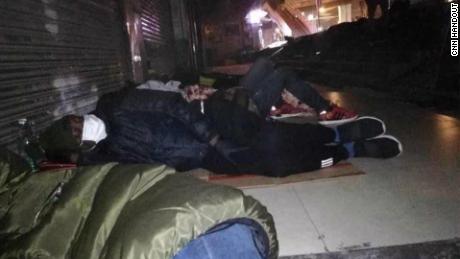
But the biggest threat to the relationship came in April when shocking images started pouring out of the southern city of Guangzhou, in China, of Africans there newly homeless, after being evicted by landlords and turned away from hotels due to fears Africans were to blame for a local coronavirus outbreak. The city began testing and quarantining all Africans, regardless of their travel history.
That prompted the unprecedented letter to Beijing from a collective described as "the African group of Ambassadors." While the Chinese government quickly moved to put out the crisis on a diplomatic level, outrage in Africa continues to simmer, and in Nigeria government ministers have proposed retaliatory measures, such as investigating the legal status of all Chinese in that country.
"The maltreatment of Africans in Guangzhou is a stain on the Africa-China relationship," says Eguegu, the Nigeria-based international affairs analyst. "By focusing on Africa (at the WHA), President Xi appears to be signaling to Africans that Africa is a priority for China.
"That might reassure many African leaders, but (the) majority of Africans who were offended by the videos and pictures from Guangzhou won't hear this speech."

Before the crisis

Before the Covid-19 crisis hit, China's investment in Africa seemed to be entering a new, more cautious phase.
After years of largesse, which saw $140 billion in loans extended to Africa between 2000 and 2018 for everything from new roads and ports to football stadiums and parliamentary buildings, Beijing had put the breaks on some infrastructure projects, and began adding firmer terms to others.
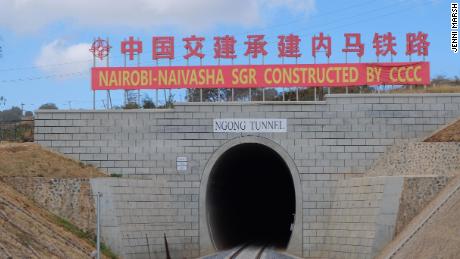
Most noticeably, after lending Kenya $3.6 billion for the first section of a railway line envisaged to connect to a yet-to-be-realized East African Railway Master Plan, Beijing has refused to finance the $3.5 billion next part of the line, saying the project was not economically viable due to debt concerns.
In Tanzania, President John Magufuli, rejected the Chinese conditions of financing for a port, which stipulated a ban on port development elsewhere in the country.
And while the 2018 Forum for China Africa Cooperation (FOCAC), a triennial summit of African heads of state with China, saw China pledge $60 billion in aid, investment and loans to Africa, that number was a flattening of the curve of upwards Chinese investment.
A legacy of lunacy haunts Kenya's old railway. Will China's $3.6B line be different?
Generally, Beijing had made a bigger pledge to Africa at each summit since FOCAC began in 2000. The pledge in 2015, for example, was three times the figure announced at the 2012 forum.
At the time, Jeremy Stevens, international economist for the Standard Bank Group, said many felt it would not be "politically appropriate" to pledge huge loans given the huge criticism China has faced from Western observers for allegedly overloading Africa with debt.
Next year, China and African states will reconvene for the next FOCAC, this time in Senegal, social distancing allowing, and no doubt the figure Beijing commits to will be closely analyzed, as African nations try to bring their economies through the havoc wreaked by the virus.
So far, the African continent itself does not appear to have been as severely hit by the coronavirus pandemic as the US, and its former colonial powers, such as the UK, France and Italy.
But as the virus rages in pockets of the continent -- the vice-president of South Sudan now has the virus -- it remains to be seen what the coronavirus toll will be there.
A true coronavirus crisis in Africa might not only test China's performance as a world leader in health, but also how deep the equal friendship Beijing has repeatedly claimed to share with Africa truly runs.

Let's block ads! (Why?)

As China faces a blacklash in the West, Xi needs Africa more than ever

indah.link
With the traditional big donors to Africa, such as Europe and the United States, focused on containing the continued spread of the virus, Xi moved to position China, which has its own outbreak largely under control, as the global leader in health.
At the gathering of World Health Organization (WHO) member states, Xi pledged to give $2 billion to the WHO over the next two years to assist developing economies -- and reminded Africa that its long relationship with Beijing had seen Chinese aid help treat 200 million Africans over the past seven decades.
Xi committed to helping 30 hospitals in Africa, setting up a pan-African health authority on the continent and supporting an affordable vaccine there, once one has been found.
Chinese President Xi Jinping speaking via video link to the World Health Assembly, on a giant screen beside a street in Beijing on May 18, 2020.
But Xi's offerings weren't just about taking the lead in Africa: they were about securing support at a critical and precarious juncture in Beijing's relationship with the continent.
While no African head of state has yet publicly criticized China's response to the virus, earlier this week the African group backed a European Union-drafted resolution co-signed by more than 100 countries calling for an independent inquiry into the coronavirus pandemic.
That comes after African ambassadors last month wrote an unprecedented joint letter to Beijing demanding answers for the mistreatment of African residents in China during the coronavirus crisis.
As the coronavirus leaves China increasingly isolated on the world stage, Xi's speech made it clear how vital the support of African nations is to Beijing.

Important diplomatic allies

China's diplomatic ties with African nations stretch back to the mid-20th century when Beijing befriended newly independent countries as it tried to position itself as leader of the developing world, and counter US and USSR influence during the Cold War era.
Since then, Africa has proved to be a critical diplomatic bloc for Beijing -- the bid by the People's Republic of China (PRC) bid to expel the Republic of China (Taiwan) from the United Nations Security Council in 1971 succeeded largely because of the support of Africa, which provided 26 of the 76 votes it needed to win. That move allowed the PRC to take Taiwan's position both on the General Assembly and as one of the five permanent members of the Security Council.
In subsequent decades, when China has faced fierce criticism from the West, African countries have continued to stand beside Beijing.
After the Tiananmen Square crackdown, China succeeding in persuading several African countries to sign an agreement saying the clashes, in which Chinese troops fired on and killed civilians, "permitted no foreign interference.
As Western nations threatened to boycott Beijing's 2008 Olympic Games over concerns of human rights abuses in China, African countries continued to support the event.
A woman wearing a face mask amid concerns over the Covid-19 coronavirus walks holding her smartphone past a Huawei shop (L) on a street in Beijing on April 22, 2020.
And more recently, as the US applied pressure on telecommunications company Huawei, accusing it of being a Trojan horse for the Chinese government, key African economies including Kenya and South Africa have welcomed its presence.
"Each time the US or the West ramps up its criticism of China, the Chinese government turns back to its long-time, all-weather friendship in Africa," says Lina Benabdallah, assistant professor in politics at Wake Forest University, specializing in China-Africa relations.
"Beijing needs its African partners to boost its image that China is not isolated or without any friends on the international arena."
As the United States in particular pushes the narrative that Beijing is to blame for the spread of Covid-19, Africa's support is once again vital as Beijing pushes the counter-narrative that after beating the virus it is now a leader in global health.
In March and April, China exported 71 billion yuan ($10 billion) in medical supplies around the world, including about 28 billion masks, to help fight coronavirus.
But Beijng's so-called mask diplomacy has received a mixed reception in the West -- in March, the European Union's foreign policy chief Josep Borrell warned about the "struggle for influence through spinning and the 'politics of generosity.'"
In Africa, governments have welcome the aid.
"Africa is home to a plethora of developing countries desperate for support to combat the health and economic impact of Covid-19," says Ovigwe Eguegu, a Nigerian international affairs analyst.
This is not the first time China has showed up to help Africa during a public health crisis. By November 2014, China had given 750 million yuan (then $123 million) in aid to the global Ebola response. While that was Beijing's largest ever response to an international humanitarian crisis it was still no match for Western donors. The US, UK, and Germany donated more than $3.6 billion by December 2015.
But with the US and parts of Europe among the world's worst coronavirus-hit countries in terms of case numbers, US President Donald Trump's public call for a cut to WHO funding, and both Europe and the US suffering economically, some African states arguably have little option but to be welcome China's assistance.

An early rupture in relations

Despite Beijing's continued publicity drive, the pandemic affects African lives directly -- and from the beginning of the crisis there were signs that the virus could fracture the China-Africa relationship.
In late February, there was uproar in Kenya when a China Southern Airlines landed in Nairobi from mainland China, which was still in the throes of the pandemic, and 239 passengers were allowed to disembark without testing
That sparked calls in the country for flights between China and Africa to be suspended while China got its outbreak under control.
In April, African ministers asked the G20 for an urgent $100 billion package, including $44 billion of debt relief. China, which is believed to hold about a fifth of African debt, according to the London-based Jubilee Debt Campaign, replied that it would act in line with other G20 nations, offering no preferential treatment to its long-time partner.
Africans in Guangzhou are on edge, after many are left homeless amid rising xenophobia as China fights a second wave of coronavirus
But the biggest threat to the relationship came in April when shocking images started pouring out of the southern city of Guangzhou, in China, of Africans there newly homeless, after being evicted by landlords and turned away from hotels due to fears Africans were to blame for a local coronavirus outbreak. The city began testing and quarantining all Africans, regardless of their travel history.
That prompted the unprecedented letter to Beijing from a collective described as "the African group of Ambassadors." While the Chinese government quickly moved to put out the crisis on a diplomatic level, outrage in Africa continues to simmer, and in Nigeria government ministers have proposed retaliatory measures, such as investigating the legal status of all Chinese in that country.
"The maltreatment of Africans in Guangzhou is a stain on the Africa-China relationship," says Eguegu, the Nigeria-based international affairs analyst. "By focusing on Africa (at the WHA), President Xi appears to be signaling to Africans that Africa is a priority for China.
"That might reassure many African leaders, but (the) majority of Africans who were offended by the videos and pictures from Guangzhou won't hear this speech."

Before the crisis

Before the Covid-19 crisis hit, China's investment in Africa seemed to be entering a new, more cautious phase.
After years of largesse, which saw $140 billion in loans extended to Africa between 2000 and 2018 for everything from new roads and ports to football stadiums and parliamentary buildings, Beijing had put the breaks on some infrastructure projects, and began adding firmer terms to others.
Most noticeably, after lending Kenya $3.6 billion for the first section of a railway line envisaged to connect to a yet-to-be-realized East African Railway Master Plan, Beijing has refused to finance the $3.5 billion next part of the line, saying the project was not economically viable due to debt concerns.
In Tanzania, President John Magufuli, rejected the Chinese conditions of financing for a port, which stipulated a ban on port development elsewhere in the country.
And while the 2018 Forum for China Africa Cooperation (FOCAC), a triennial summit of African heads of state with China, saw China pledge $60 billion in aid, investment and loans to Africa, that number was a flattening of the curve of upwards Chinese investment.
A legacy of lunacy haunts Kenya's old railway. Will China's $3.6B line be different?
Generally, Beijing had made a bigger pledge to Africa at each summit since FOCAC began in 2000. The pledge in 2015, for example, was three times the figure announced at the 2012 forum.
At the time, Jeremy Stevens, international economist for the Standard Bank Group, said many felt it would not be "politically appropriate" to pledge huge loans given the huge criticism China has faced from Western observers for allegedly overloading Africa with debt.
Next year, China and African states will reconvene for the next FOCAC, this time in Senegal, social distancing allowing, and no doubt the figure Beijing commits to will be closely analyzed, as African nations try to bring their economies through the havoc wreaked by the virus.
So far, the African continent itself does not appear to have been as severely hit by the coronavirus pandemic as the US, and its former colonial powers, such as the UK, France and Italy.
But as the virus rages in pockets of the continent -- the vice-president of South Sudan now has the virus -- it remains to be seen what the coronavirus toll will be there.
A true coronavirus crisis in Africa might not only test China's performance as a world leader in health, but also how deep the equal friendship Beijing has repeatedly claimed to share with Africa truly runs.

Let's block ads! (Why?)