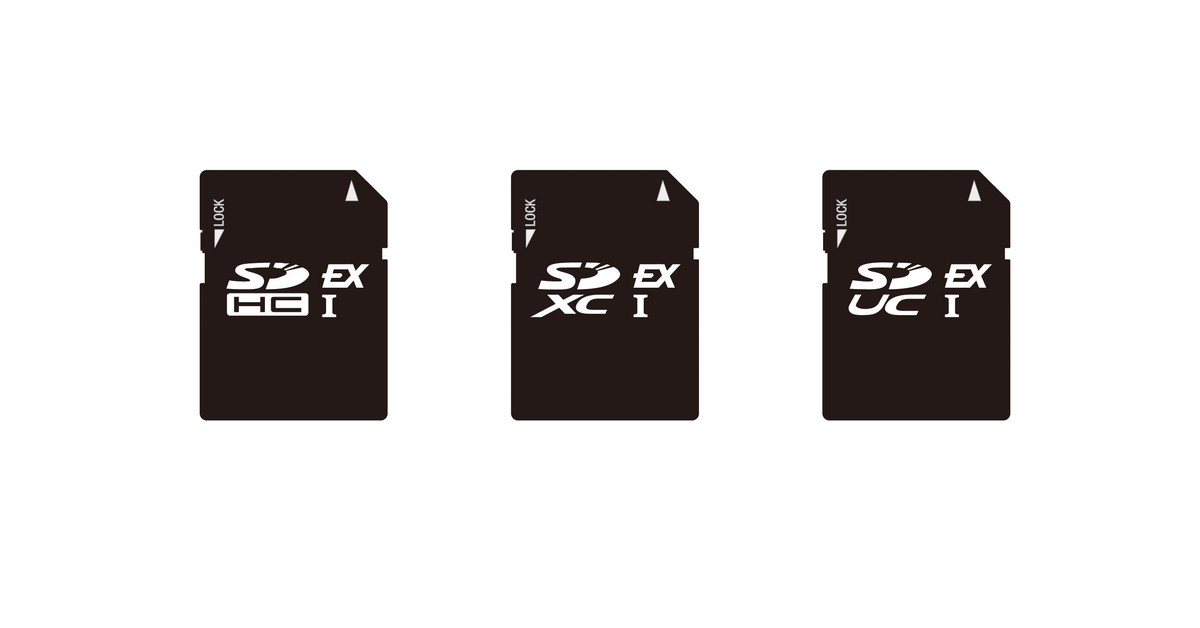
The SD Association, the group that sets the standards for memory cards, announced a new SD 8.0 specification for SD Express memory cards today that will allow the cards to transfer data at a rate of nearly four gigabytes per second, in large part thanks to utilizing PCIe 4.0 and NVMe interfaces commonly found in solid-state drives. That faster transfer rate could be useful as new technologies, like 8K video, create ever-larger files, which in turn require faster throughput if you want to transfer data in a timely manner.
Specifically, the 8.0 specification allows for transfer speeds of up to 3,938 megabytes per second, according to an SD Association white paper. That’s a significant jump from the maximum transfer speeds of 985 megabytes per second you’d find in cards built to the SD 7.0 and SD7.1 specs, which utilized the slower PCIe 3.1 interface. The new specification will be available on SDHC, SDXC, and SDUC memory cards, says the SD Association, which means it could theoretically be used on a 128TB SDUC card, which is currently the highest amount of memory supported by an SD card.
Although the spec was announced today, that doesn’t mean you can run to Best Buy and pick up a new card with the SD 8.0 specification — you’ll have to wait until memory card makers actually implement the specification into upcoming products. You’ll also need devices that read the cards on the hardware end — like laptops, cameras, and card readers — to support the spec, a process that’s likely to take quite a while.
Self-driving cars are having a really rough time gaining our trust.
This is not a total shock considering autonomous vehicles remain theoretical and elusive for most people. The limited number of self-driving cars on the road today are mostly test vehicles that aren’t available to the riding public. Combine that with Americans’ very, shall we say, complicated feelings toward concepts like “freedom” and “control,” and you can see where this is going. Digging on technology in the streets, control freaks in the sheets.
The latest poll to affirm this deep distrust comes from Partners for Automated Vehicle Education (PAVE), a coalition of industry players and nonprofits aimed at improving the public’s understanding of autonomous vehicles. A quick glance at the results reveals that they’ll have their work cut out for them.
Nearly 3 in 4 Americans say autonomous vehicle technology “is not ready for primetime.”
About 48 percent said they would never get in a taxi or ride-sharing vehicle that was self-driving.
Another 20 percent think autonomous vehicles will never be safe.
Only 34 percent think the advantages of AVs will outweigh the disadvantages.
Only 18 percent are eager to get on a waitlist for the first AV.
These were some of the findings to emerge from PAVE’s survey of 1,200 Americans, who were contacted by polling firm SurveyUSA between late February and early March 2020. But it could easily have been the results of any poll about self-driving cars taken over the last five years. A variety of auto-related groups like AAA, Kelley Blue Book, and Advocates for Highway and Auto Safety have found similar skepticism in their polls.
Taken together, these results paint a pretty grim picture for the future of autonomous vehicles. After all, much of the technology’s success will depend on public perception and willingness.
Companies working on self-driving taxis, like Waymo, Cruise, and Argo, are already confronting these issues through their own pilot projects and limited commercial deployments. Of course, they have their own data and thus their own ideas on how to overcome this skepticism.
And the numbers aren’t all bad, either. Around half of the people polled by PAVE and SurveyUSA said they owned vehicles with advanced driver assistance system (ADAS) features like automatic emergency braking, lane-keep assist, and blind spot detection. Familiarity and approval of these features can lead to a more positive attitude about self-driving cars, the poll finds. It makes sense, but it’s still a far leap between a car with enhanced cruise control and one that can drive itself without human intervention.
Most people responded favorably to a vehicle that supports the task of driving “but with the driver always in full control.” This is antithetical to every company that claims to be pursuing fully driverless cars. They argue that most vehicle crashes are the result of human error, and that in order to improve road safety, humans need to be removed from the equation.
That’s why you have companies like Cruise introducing vehicles without traditional controls like steering wheels and pedals. And companies like Nuro are lobbying the government for exemptions from federal regulations requiring certain features like rearview mirrors and backup cameras.
PAVE says this skepticism and distrust is rooted in ignorance and lack of experience rather than knowledge of a specific downside or problem. For example, a majority of the respondents said they weren’t familiar with any of the fatalities associated with automated technologies, such as the deadly Uber crash in Tempe, Arizona, or any of the drivers who were killed while using Tesla’s Autopilot system. That should be a red flag to operators: people don’t need to hear about the really big failures to harbor real hostility toward the technology.
The more self-driving cars that hit the road, the more people are likely to trust them, PAVE concludes. But that will take some time, given that many of the early predictions about the readiness of the technology have since proven to be overly optimistic. A lot of people thought the roads would be overrun with robot vehicles by 2020, but here we are. It’s 2020, and the number of AVs currently testing today are a fraction of a fraction of a percent.
“There was a misperception that autonomous tech would one day be solved in a binary fashion and become available everywhere,” Karl Iagnemma, CEO of Hyundai and Aptiv’s joint venture on autonomous vehicles, told me recently. “There’s been steady improvement over time, but it’s clear there would not be binary step function where one day we don’t have AVs and the next they’re everywhere.”
Iagnemma said that AV operators are only just beginning to grasp how the public perceives self-driving cars. This is useful information, but it will take time and more vehicles and more people before perceptions start to change. For example, Aptiv’s robotaxi pilot with Lyft in Las Vegas, which has conducted over 100,000 rides, includes two safety operators in the front seat. People see those two operators, but they also see the car do things they haven’t seen before.
“Despite the fact that there are vehicle operators in the car, customers see the steering wheel turn by itself,” Iagnemma said. “It’s a big moment for most people. A formative experience.”
Samsung has announced a new 50-megapixel camera sensor called the ISOCELL GN1. It’s Samsung’s first sensor to include both dual-pixel autofocus and Tetracell pixel-binning, which the company says should offer a combination of fast performance and good low-light image quality.
The pixel size is 1.2μm, closer to what you’d find on a conventional phone camera sensor than the high-resolution chips that’ve become increasingly popular over the past year-plus. The obvious competitor is Sony’s new IMX689 sensor, featured in phones like the Oppo Find X2 Pro, which has 48 megapixels at 1.22μm. By default, Samsung’s sensor will take 12.5-megapixel photos with four pixels binned into one.
The addition of dual-pixel phase-detection autofocus is noteworthy because Samsung had a recent high-profile failure in that area. The Galaxy S20 Ultra, which used a 108-megapixel sensor without dual-pixel tech, suffered from poor autofocus performance; Samsung said it would issue a fix, though we haven’t been able to test for improvements yet.
In any case, the combination of high resolution and fast autofocus speed is clearly Samsung’s priority with the ISOCELL GN1. The company says the sensor entered mass production this month, so it shouldn’t be too long before it shows up in phones.
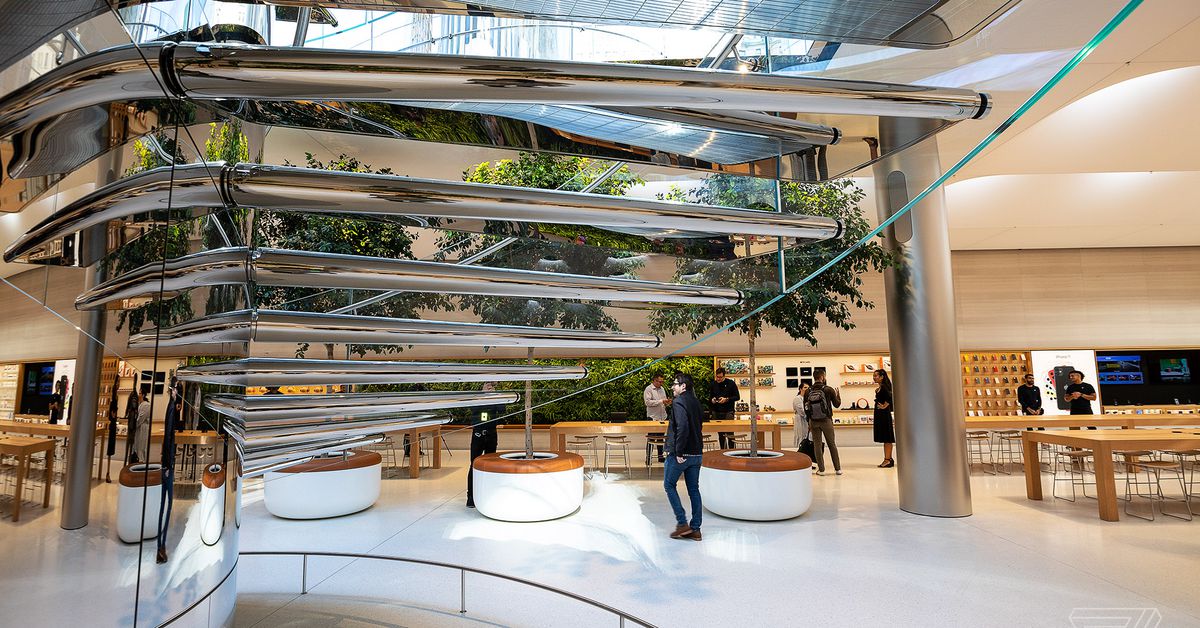
Apple’s head of retail Deidre O’Brien has posted a letter on the company’s website detailing how it plans to safely restart operations at its retail stores. Apple shut all of its stores outside Greater China in March as COVID-19 spread worldwide; all the Greater China stores reopened that same month, while Apple is still in the process of taking careful steps elsewhere.
“Our commitment is to only move forward with a reopening once we’re confident we can safely return to serving customers from our stores,” O’Brien writes. “We look at every available piece of data — including local cases, near and long‑term trends, and guidance from national and local health officials. These are not decisions we rush into — and a store opening in no way means that we won’t take the preventative step of closing it again should local conditions warrant.”
More than 80 percent of Apple’s 510 stores worldwide remain closed, but the company plans to reopen 25 more stores in the US, 12 in Canada, and 10 in Italy over the next week, 9to5Mac reports. The degree of service offered will vary by store, O’Brien says. All stores will allow customers to make Genius Bar reservations and pick up items ordered online, but some will only offer storefront or curbside service rather than having customers enter the store itself.
For those stores that do open their doors, O’Brien says temperature checks will be conducted and all staff and customers will be required to wear face coverings. Apple will provide coverings to customers who don’t have their own, and will enforce social distancing rules with a limited number of people in the store at once. “In every store, we’re focused on limiting occupancy and giving everybody lots of room, and renewing our focus on one‑on‑one, personalized service at the Genius Bar and throughout the store,” O’Brien writes.
Apple reopened a few US stores last week in Idaho, South Carolina, Alabama, and Alaska. CNBC reports that this week’s reopenings will be in Florida, Hawaii, Oklahoma and Colorado, with some California and Washington locations offering curbside service. Details of reopenings will be updated through Apple’s Find a Store search tool.
Nintendo has announced the addition of four more games to its Switch Online subscription service. Nintendo Switch Online lets you play Switch games over the internet as well as providing a library of free NES and SNES titles.
The additions for May include one NES game and three SNES games. The NES game is Tecmo’s mythical action game Rygar, while the SNES additions include Natsume’s cult sci-fi western shooter Wild Guns and Jaleco’s overhead shooter Operation Logic Bomb.
The most notable game added to the service in this round is Panel de Pon, which was never released in the US — at least not in this form. It’s a classic SNES puzzle game designed by the legendary Gunpei Yokoi, but outside Japan the game was titled Tetris Attack and its fantasy anime style was replaced by Nintendo characters from Yoshi’s Island.
Panel de Pon’s gameplay has nothing to do with Tetris, and subsequent spins on the formula were called Puzzle League; various Nintendo properties like Pokémon, Animal Crossing, and Dr Mario have all featured in crossover titles. This Switch release of Panel de Pon is the first time most people outside of Japan will be able to see where it all began.
All four games will be available through Nintendo Switch Online on May 20th. This will bring the total number of games on the service to 82.
Ubisoft is offering free downloads of its educational tours of ancient Greece and ancient Egypt, which are based on the studio’s recreations of those worlds in Assassin’s Creed Origins and Assassin’s Creed Odyssey, the studio announced today. The tours will be free to claim until May 21st.
You can download Discovery Tour: Ancient Greece and Discovery Tour: Ancient Egypt from Ubisoft’s website here, though you’ll need a Uplay account to claim them.
Here’s what’s available in Discovery Tour: Ancient Greece, according to Ubisoft:
Travel throughout 29 regions and uncover hundreds of stations with tours on 5 different themes: philosophy, famous cities, daily life, war and myths to learn more about history of Ancient Greece.
And here’s what’s you can do in Discovery Tour: Ancient Egypt:
The Discovery Tour allows you to roam freely in the beautiful world of Ptolemaic Egypt. Learn more about its life, habits and customs by yourself, or let historians and Egyptologists guide you on one of the 75 available historical tours they have curated.
My colleague Andrew Webster said the Egypt-based tour felt “sort of like one of those audio tours in museums — except here you can climb a pyramid or ride a boat down the Nile while you learn,” when he played it in 2018.
An Amazon warehouse worker in Indianapolis, Indiana, has died of COVID-19, the company confirmed.
The death brings the known total of COVID-19 deaths at Amazon warehouses to seven, but Amazon’s process for notifying workers makes the true number difficult to determine. Several workers at IND8 first learned of the death through rumors and say management began informing employees more widely only after being confronted.
“They weren’t going to say anything if it wasn’t for people asking questions,” says a worker at IND8, who asked to remain anonymous out of fear of retribution.
Amazon has repeatedly declined to say how many warehouse employees have been diagnosed with or died from the virus. In an interview on “60 Minutes” that aired Sunday, Amazon senior vice president of worldwide operations Dave Clark called statistics on infections “not a particularly useful number.” On Tuesday, 13 state attorneys general wrote to Amazon requesting data on the number of workers who had contracted or died of COVID-19.
An Amazon spokesperson said the company was made aware of the Indiana employee’s death on April 30th and immediately notified all employees within the building. “We are saddened by the loss of an associate at our site in Indianapolis, IN,” the company said in a statement. “His family and loved ones are in our thoughts, and we are supporting his fellow colleagues in the days ahead.”
In March, Amazon workers criticized the company for failing to notify employees when their colleagues were diagnosed with the virus. The company now sends text alerts or automated calls when a worker is diagnosed, but the alerts often refer only to “multiple new cases,” so workers have been left to tally alerts themselves to figure out the prevalence of the coronavirus at their facility. At IND8, workers believe the number is around a dozen. Jana Jumpp, an Amazon warehouse worker in Indiana, has been collecting alerts sent to workers around the country and says at least 800 Amazon warehouse workers have been diagnosed with the virus.
The Indianapolis case is the second known death of an Amazon warehouse worker in the state, after a worker was confirmed to have died in Jeffersonville, and it’s the seventh in the US. Workers have also died in Staten Island, New York; Bethpage, New York; Waukegan, Illinois; Hawthorne, California; and Tracy, California. It’s unclear how the worker contracted the virus, and the employee’s name hasn’t been released. Amazon says he was last in the building on April 19th.
Amazon has been determined to maintain something resembling normal operations throughout the pandemic. Faced with a surge of orders, it hired 175,000 new workers and resisted closing US warehouses where workers tested positive. (So far it has closed only one in the US, a returns-processing facility in Kentucky, after the governor ordered it shut.) After temporarily stopping deliveries of nonessential goods to its warehouses, it has now lifted restrictions and says delivery times have begun to fall to their pre-pandemic levels.
But workers, activists, and lawmakers have raised concerns about the safety of the company’s warehouses. Starting in late March, warehouse employees staged walkouts, calling for facilities to be closed and cleaned after employees tested positive for the virus. Amazon fired several workers who raised safety concerns, and last week, senators wrote a letter demanding information on the terminations. Earlier this month, a senior engineer and vice president resigned over the firing of workers who called for improving warehouse conditions.
Amazon has instituted new safety measures, including temperature checks, face masks, and increased cleaning. “Our top concern is ensuring the health and safety of our employees, and we expect to invest approximately $4 billion from April to June on COVID-related initiatives to get products to customers and keep employees safe,” the company said in a statement. The company also says infection rates at its warehouses are at or below the rates in the communities where they are located.
But workers at IND8 and elsewhere say cleaning has been uneven and conditions are often too crowded to allow for proper social distancing. Many worry that recent policy changes put them at greater risk. This month, Amazon reversed a policy it instituted at the onset of the pandemic that allowed workers to take unlimited time off without pay. (Amazon is set to end another coronavirus policy, an additional $2 per hour of hazard pay, on June 1st.) The leave policy had allowed workers who feared for their safety — and could afford to go without a paycheck — to stay home without being fired for overdrawing their quarterly allotment of 20 hours of unpaid time off. When the policy ended on May 1st, workers say their facilities became far more crowded.
“Before we had the unlimited UPT [unpaid time off] so if people didn’t feel safe, they didn’t have to come to work,” said a worker at IND8. “When that went away, we went from having one hundred twenty five people back to four to five hundred people per shift. It’s really crowded.”
That worker and others are concerned the end of the time-off policy is pushing people who feel sick to come to work. Amazon offers paid leave for people diagnosed with COVID-19, and partial pay for people with fevers but no test results, but no general sick leave. This week, workers at IND8 were sent home early when a worker on the floor received a positive COVID-19 test result.
The facility was cleaned, but the next shift came in as usual. For the IND8 workers, the risk feels particularly unwarranted, because they process returned merchandise rather than sending out goods to homebound customers. “We’re not essential,” said a worker. “Everyone’s like, why are we not shut down?”
That worker has received six notifications about positive cases at the facility, but it’s unclear how many people those alerts represent. Trying to get a sense of the risk, she wrote on the Voice of the Associate board, a bulletin for workers to request changes and ask questions, exactly how many cases there have been at the warehouse. She has received no response.
Tesla is fully reopening the Gigafactory in Nevada, where it makes batteries for its electric cars and energy storage products, as well as parts for the Model 3, according to an internal email viewed by The Verge.
The full reopening is more aggressive move than what the company told employees to expect last week, when Tesla said it would only resume “limited operations” as the state began the first phase of its plan to restart some businesses during the novel coronavirus pandemic.
Tesla remains in negotiations with Alameda County, which issued a shelter-in-place order in March that forced the company to shut down its Fremont, California car factory. Tesla has already resumed production there in violation of the county’s public health order. CEO Elon Musk received support for reopening that factory on Tuesday morning from President Donald Trump, who tweeted: “California should let Tesla & @elonmusk open the plant, NOW. It can be done Fast & Safely!”
An official for Storey County, where the Nevada Gigafactory is located, did not respond to a request for comment. Tesla did not respond to a request for comment.
Tesla stopped production at its US factories in mid-March as counties and states around the country introduced shelter-in-place orders meant to stop the spread of the virus. The company resumed production at Fremont last weekend and called back all of its furloughed workers on Monday, as The Verge first reported. On Monday afternoon, Musk confirmed in a tweet that Tesla was restarting production “against Alameda County rules,” said that he would be “on the line” at the factory, and asked that only he be arrested if law enforcement officials try to shut down operations.
Shortly after Musk’s tweet on Monday, Tesla’s North American HR boss Valerie Workman sent an email to the Nevada Gigafactory workers titled: “Furlough Has Ended And We Are Back To Work in Production!”
“We’re happy to get you back to work and have implemented very detailed plans to help keep you safe as you return,” she wrote in the email, a copy of which was provided to The Verge by a current employee. The plans she referenced include stocking the employee shuttles to the factory with unspecified personal protective equipment, according to the email. She also said Tesla is increasing the number of shuttles that run to the Gigafactory, which is located about 25 miles east of Reno, Nevada, and reducing their individual capacity.
Employees were told they’d be contacted within 24 hours by a manager or Tesla representative and given a return-to-work date, and that, “in most cases, your position, supervisor, responsibilities, pay and hours will remain the same as before.”
Workman told Gigafactory employees that they are allowed to stay home on unpaid leave if they “do not feel comfortable coming into work,” just as the company told its factory workers in California. But because the furlough is ending, she explained that workers may no longer be eligible for unemployment benefits they were receiving during the shutdown.
At one point, Tesla told employees it planned to reopen on May 4th at all three of its production sites in the US: the Nevada Gigafactory, the Fremont factory, and New York solar panel factory. But those states extended their shelter-in-place orders, meaning non-essential businesses had to stay closed. On May 7th, though, Nevada Governor Steve Sisolak announced the first phase of his state’s plan to allow many businesses to reopen. It requires certain protective measures, including that employees wear face masks, and that employers be vigilant about performing temperature checks and screening workers for symptoms of COVID-19.
The mayors of the cities of Fremont and Palo Alto (which is home to the company’s corporate offices) voicedsupport for keeping Tesla in the state and allowing the company to restart production. But Musk got an even bigger boost from the Trump administration this week — first from treasury secretary Steve Mnuchin, and later from Trump himself. Trump has been talking about “reopening the economy” for more than a month despite mounting COVID-19 cases and related deaths. He reportedly voiced support for Musk on a private call with CEOs last month, according to The Washington Post.
Tesla released a detailed plan over the weekend for how it will protect workers at the Fremont factory, which Musk has said is informed by what Tesla learned when it reopened its Chinese Gigafactory earlier this year. Alameda County officials tell The Verge that Tesla has submitted a new version of this plan that is under review, too. The company told Tesla in a Monday letter that it “must cease” production until that plan is approved.
Some workers who have already returned to the California factory have described scattershot implementation of the plan so far. One of them, who spoke to The Verge on the condition of anonymity, said Tesla provided cloth masks during their shift on Monday that were “so small they don’t cover your nose mouth and chin,” that the company “offered gloves but didn’t require [employees] wear them,” and that “social distancing was mentioned but never enforced.”
Three employees also told CNBC it was impossible to implement social distancing during production. Those employees said Tesla was checking people’s temperatures as they arrived to the factor and that the company has staggered their shift and break times.
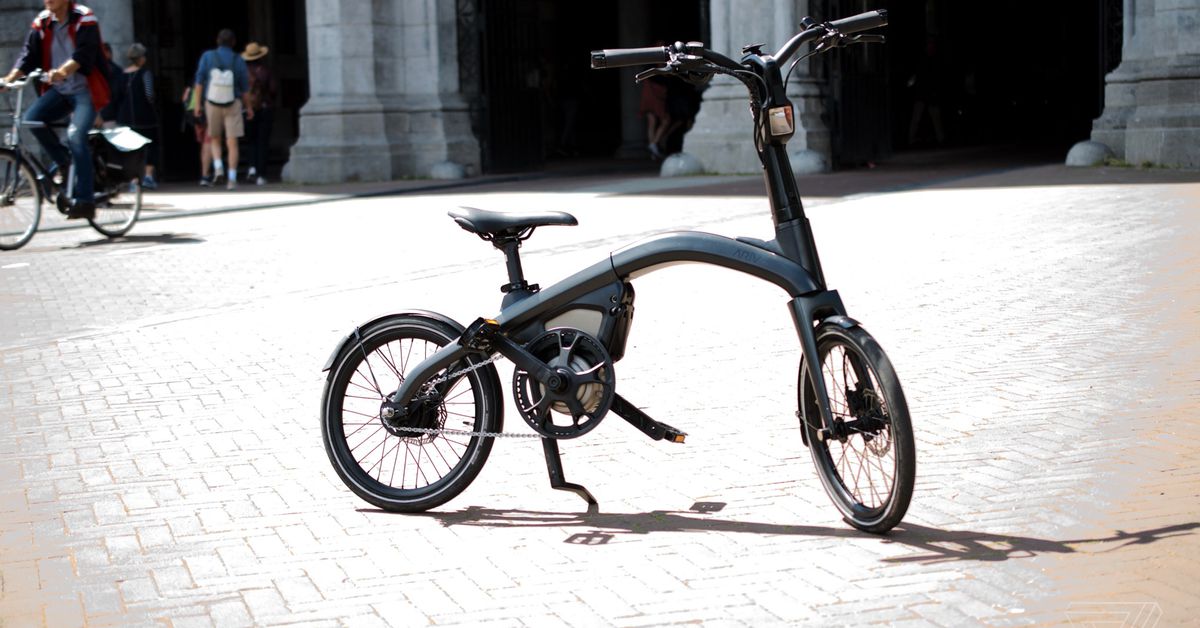
GM has killed its first electric bike. The automaker’s Ariv e-bikes, pronounced like “arrive” and stylized as “ARĪV,” were released last year in a handful of countries in Europe. But thanks to COVID-19, the company said it has decided to wind down its e-bike production. The website where customers previously could place orders now redirects to GM’s main site.
GM was the latest automaker to try leverage its experience in manufacturing, batteries, and powertrains to build an amazing electric bike. And early reviews suggested they may have done it. The Verge’s Thomas Ricker tested out both available models last year — the Ariv Meld and the foldable Merge — and came away impressed.
In a statement to The Verge, GM said the decision was the result of the company needing to take a hard look at its various business amid the coronavirus pandemic. “Ariv has generated significant insights about micromobility for General Motors, and we plan to use those insights to benefit future innovation,” said Brian Tossan, GM’s director of global innovation.
The COVID-19 outbreak has cut deeply into GM’s business, costing the largest US automaker $1.4 billion before taxes during the first three months, according to its latest earnings report. Still, the company eked out a $294 million profit for the first quarter despite the crisis. GM’s North American factories have been closed since mid-March, but the company recently informed workers it was planning to resume production on May 18th.
Ariv isn’t GM’s only casualty of COVID-19. The company also recently shut down Maven, the car-sharing service it first launched in 2016.
The decision to end GM’s e-bike production may have seemed necessary, but e-bike sales in the US and Europe are actually growing during the shutdown. Several e-bike makers have reported record sales, following an initial dip in the immediate aftermath of the pandemic.
Some Apple employees will return to the company’s global offices soon, according to Bloomberg. Apple’s decision to bring employees back to its offices — including its Apple Park headquarters in Cupertino, California — contrasts with some other large tech companies, many of which have extended work from home polices due to the ongoing COVID-19 pandemic.
Apple is planning to have employees to return in phases over a few months. The first phase focuses on employees who are unable to do their jobs from home or who are “facing challenges working from home,” reports Bloomberg. This will likely include employees who work on the company’s hardware products, and some employees who are part of this phase have apparently already started working at Apple’s offices again. More employees will return to Apple’s offices in a second phase of the plan that’s scheduled to start in July.
It’s unclear what changes Apple may make in its offices to help prevent the spread of COVID-19, such as improving ventilation. But some employees asked to return may only have to be in the office for certain amounts of time, according to Bloomberg, and CEO Tim Cook reportedly told employees in April that temperature checks and social distancing would likely be implemented when employees return.
Some other major tech companies are not asking employees to return to offices as quickly as Apple is. Both Google and Facebook will allow most employees to work from home through the rest of the year, Amazon will let employees work from home until “at least” October 2nd, and Twitter is letting employees work from home indefinitely as of Tuesday.
Apple also plans to open some of its retail stores after closing all of them outside of China on March 14th. Some stores in Idaho, South Carolina, Alabama, and Alaska will apparently be opened sometime this week, and employees will have to submit to temperature checks and wear masks.
No, it’s not just you. Slack is indeed down due to an outage of some sort that appears to have begun happening some time around 7:30PM ET. User-reported issues have spiked on DownDetector.com, and the app is largely inaccessible, with posts not getting marked as read or not going through at all. The issues are affecting both the mobile and desktop versions of the app.
Slack ahs confirmed the outage on its status website, writing, “Users have reported general performance issues such message sending failures and timeouts. We’re working to get things back to normal as quickly as possible and will provide an update shortly,” at 7:53PM ET. Shortly after at 8:02PM ET, the page was updated with, “Users are unable to connect to Slack. We are investigating and will provide an update shortly.”
The issues seem widespread, although it may be too early to tell whether it’s isolated to any one part of the US. DownDetector seems to indicate it’s hitting the West Coast rather hard, but that may be a factor of Slack’s higher usage among tech companies.
On Twitter, Slack’s official account responded to journalist Jeff Elder saying it does not “have a super solid timeline at the moment” to how long it’s been down, and engineers are looking into what the issue is.
We don't have a super solid timeline at the moment. We're taking a look and hope to be back up shortly!
Slack announced a redesigned iPhone app with a new navigation bar at the bottom of the app in update notes today. However, it seems the redesign is still rolling out, even if you’ve updated to the latest version of the app — myself and another Verge colleague don’t have it yet, for example.
The new look appears to bring the iPhone app in line with the Android redesign that rolled out on May 5th. “Previously, it was complicated to get to the four main things people do on mobile,” Slack said in the App Store update notes. “We’ve fixed this with a new nifty navigation bar at the bottom of the app containing: a Home view for your sidebar, DMs, (still listed most recent first), Mentions (for quickly catching up), and You (because you’re great) (and also because setting your status/preferences on mobile needed to be easier).”
Here are some screenshots from the App Store of what the redesign looks like:
The update also adds a floating compose button in many places throughout the app as well as the ability to order your channels in the “Home” tab, much like how you can order your channels in Slack’s recent desktop redesign. You may also have to re-adjust some of your muscle memory when using the app, as some of the swiping behaviors have changed. “Now, swiping right will reveal your workspace and preferences, and swiping left will get you back to the last conversation you were in,” Slack says in the update notes. The update appears specific to the iPhone version of the app, meaning the iPad version remains the same for now.
If you don’t have the redesign yet, it seems likely the update will be available more broadly soon, since Slack has laid out all of the new features of the update in the App Store already.
School’s out for the foreseeable future, nannies are isolating at home, daycare centers have shut down, and play dates have been canceled. Your children now depend on you for 24-hour care, education, and amusement. So what can you do to make your days — and theirs — better?
We asked the parents of Vox Media what they’ve been using to help them care for, teach, and entertain their kids at home. Here are some of the answers we got.
(Note: if you plan to use a Nest Cam or other internet-connected camera as a child monitor, you may want to check out this article on how to secure Nest and other devices.)
I love the Baby Connect app for keeping track of baby schedules and health things. It supports multiple kids (perfect for those with twins / multiples) and allows multiple users / parents / nannies / sitters / doctors to be added as users to add logs.
Melissa Young Engineering manager, revenue experience
[I agree] on the Baby Connect app. It has many features we don’t use, but we have always used it for tracking height / weight / head size, and it immediately shows percentile and growth charts.
Sprout lets you track feedings, medications, and more. It’s especially helpful in that newborn period where you lose all short-term memory and concept of time. With Sprout, I could mark down when I fed the baby, and I didn’t have to rely on my foggy brain to remember. My husband and I still sometimes use it to remember when we gave our son, now almost two, Tylenol or other medicine. You can share it with multiple family members so everyone has the info.
I loved using our Dropcam as a baby monitor (eventually having two for both our children). It’s easy to use, and multiple people can simultaneously view, play back, and video capture. There were several organic moments I was able to save to video that are priceless (like my son first saying, “Mama” and my daughter comforting and singing to my son at night).
Jory Ruscio Senior full-stack engineer, data
(Note: The Dropcam cameras have been replaced by Nest Cams.)
The Cloud Baby Monitor app has saved us a few times when our regular camera / monitor setup did not have the range we needed. It can send push notifications when it detects sound in the room, which is very useful.
I have the Infant Optics DXR-8 in both of my kids’ rooms and one at my in-laws’ place. It’s an awesome video monitor and you can also talk through it, so if I’m two floors away and my son is up and fussing, I can tell him I’m coming and he calms down.
Erin Bakst SVP, people & culture
Alexa / Echo
Our favorite tech for babies is Alexa — we used this nonstop! With my first baby, I was terrible at logging all the things I needed to. So with this baby, I used Alexa. As in: “Alexa, log that I am feeding the baby 6 ozs.” “Alexa, log that the baby pooped.” “Alexa, set an alarm for three hours for bottle one” (since after three hours, the bottle is bad). I didn’t have to write anything down — it was so easy! Then we’d use Alexa’s “sounds of the ocean” for when she slept.
Heather Savatta Concert solutions
[I agree] on Alexa / Echo. We use it as a timeout timer. Taught our kids to say “Alexa STOP” really fast. Also, you can use the Echo as a monitor if you want. You can use your phone to tap into it as a listening device.
Years from now, I may regret letting my kids grow up with Alexa in their lives. But as long as I’m still putting babes to bed, I’m grateful for hands-free, voice-dimmable lights. They’ve allowed us to carry our daughters upstairs and change diapers in the middle of the night, without tripping over toys or the fear of waking them up with a sudden burst of light to the face. “Alexa, set the lights to 1 percent” might be the most uttered phrase in our house these days.
I love my VTech non-video baby monitor. It’s about $30 and works amazingly well without any of the static that many monitors have — and it’s nice to have something that is just audio. We also have a Nest Cam functioning as a video monitor when we want to see what is happening, but we have found that the audio serves our notification purposes and keeps a check on that new parent panic that you might develop from being able to watch your baby / kid sleep all the time.
Miriam Nissly Assistant general counsel
[I can vouch] for the VTech monitor! For video, we use the Lollipop baby monitor, which is totally fine but dependent on Wi-Fi, so we figured it’d be good to have a backup just in case.
We’re a big fan of Osmo games for preschool-plus. Playing Osmo is a much-loved activity for my three kids, aged three, five, and seven. The physical pieces allow for a much more interactive and tactile experience. The games are entertaining and educational. From exploring physics, making pizzas and calculating change, and coding, the kids are occupied for hours.
My son has had a lot of fun with this set. Great concept in using a toy with which kids are already familiar (Lego) and introducing them to programming and robots. I love how my son will follow the step-by-step instructions to the end, and then modify the suggested programming to do something different. It’s both directed and open-ended.
We recently got on board the ABCmouse train for our five-year-old and it’s surprisingly great! The graphics are very 2002, but it is keeping her entertained for about an hour a day.
I love the Google Chromecast because we try to minimize handheld screentime in our home, and that basically lets me cast whatever they want to watch or do on my phone onto the TV screen.
On paper, there are a lot of things that make the Kids Edition Fire tablets attractive to parents. They all come with a bulky rubber case that makes it easy to hold and hard to break. Should your kid break it, Amazon provides two years of worry-free protection. And each Kids Edition tablet comes with a subscription to Amazon’s FreeTime service, which lets parents control what content is available on it and set time limits for how long kids can use the tablet each day.
In practice, the tablets are objectively terrible. The interface is confusing, the performance is slow and laggy, and the battery life leaves a lot to be desired. Those things all matter to me, a professional product reviewer, but for my five-year-old and eight-year-old, the Fire Tablets we got them a couple holidays back are their favorite toys. They use them to play games, watch Spongebob Squarepants, and maybe occasionally read a book. On road trips, back when we used to take those, they were indispensable to keep them happy and occupied and let me worry about merging onto the interstate.
While we’re stuck at home for the foreseeable future, we have to aggressively dole out access to the tablets, lest the kids spend all of their waking moments staring at them. I do wish they were more useful for helping with schoolwork — these are still primarily playtime and entertainment machines — but my kids don’t seem to mind that they aren’t.
The Hatch Rest+ is basically the world’s fanciest white noise machine. I love it because you can control it through your phone; it can be a monitor, it has programmable settings so it comes on automatically for bedtime and nap times, and you can create a wake-up setting with different noises or lights. It has a chargeable battery so you can unplug it and move it around the house if you need to.
I have one in both of my kids’ rooms. When my son is being loud while the baby is taking a nap, we’ll turn up her white noise in the app. It’s really convenient! Oh, and the speaker is two-way so you can talk through it from your phone.
Lauren Williams SVP & editor-in-chief, Vox & Recode
I also used the Hatch Rest. It’s programmable from your phone with schedules, and can be used as a nursery night light, an okay to wake light, a sound machine, etc.
Dohm is great because it is natural noise. We still use it today. White noise is a must when you’re living in a city, have a creaky house, or have siblings sharing a room.
Huckleberry was really helpful in getting our kids sleep trained. It has a simple user interface that lets you log bedtimes, naps, and feedings. It then calculates their “SweetSpot” for when their next nap will be or when their bedtime should be. It’s usually spot on and has made putting the kids down a breeze. If you like charts and graphs, it shows a visual history of their sleep patterns so you can see when and how much sleep your kids are getting over time.







:format(webp):no_upscale()/cdn.vox-cdn.com/uploads/chorus_asset/file/19961590/Screen_Shot_2020_05_11_at_2.35.08_PM.png)
:format(webp)/cdn.vox-cdn.com/uploads/chorus_image/image/66776435/VRG_ILLO_4015_Kids_Gadgets.0.jpg)
:format(webp):no_upscale()/cdn.vox-cdn.com/uploads/chorus_asset/file/19948917/Screen_Shot_2020_05_06_at_3.27.23_PM.png)
:format(webp):no_upscale()/cdn.vox-cdn.com/uploads/chorus_asset/file/19948918/Screen_Shot_2020_05_06_at_3.27.07_PM.png)
:format(webp):no_upscale()/cdn.vox-cdn.com/uploads/chorus_asset/file/19949048/spout1.png)
:format(webp):no_upscale()/cdn.vox-cdn.com/uploads/chorus_asset/file/11495839/vpavic_180605_2644_0027.jpg)
:format(webp):no_upscale()/cdn.vox-cdn.com/uploads/chorus_asset/file/19950097/Screen_Shot_2020_05_07_at_9.40.57_AM.png)
:format(webp):no_upscale()/cdn.vox-cdn.com/uploads/chorus_asset/file/19950127/Screen_Shot_2020_05_07_at_9.49.50_AM.png)
:format(webp):no_upscale()/cdn.vox-cdn.com/uploads/chorus_asset/file/13256007/dseifert_181011_3006_1144_2.jpg)
:format(webp):no_upscale()/cdn.vox-cdn.com/uploads/chorus_asset/file/16500590/hue_bluetooth.jpg)
:format(webp):no_upscale()/cdn.vox-cdn.com/uploads/chorus_asset/file/19950445/Screen_Shot_2020_05_07_at_11.41.54_AM.png)
:format(webp):no_upscale()/cdn.vox-cdn.com/uploads/chorus_asset/file/19950507/Screen_Shot_2020_05_07_at_12.10.20_PM.png)
:format(webp):no_upscale()/cdn.vox-cdn.com/uploads/chorus_asset/file/19950518/Screen_Shot_2020_05_07_at_12.14.14_PM.png)
:format(webp):no_upscale()/cdn.vox-cdn.com/uploads/chorus_asset/file/19950773/ABCmouse_KinderClassroom_RGB.png)
:format(webp):no_upscale()/cdn.vox-cdn.com/uploads/chorus_asset/file/13279141/DSCF0174.jpg)
:format(webp):no_upscale()/cdn.vox-cdn.com/uploads/chorus_asset/file/19952318/61D5GLAdyUL._AC_SL1000_.jpg)
:format(webp):no_upscale()/cdn.vox-cdn.com/uploads/chorus_asset/file/19950828/rest_plus_app_timetorise.jpg)
:format(webp):no_upscale()/cdn.vox-cdn.com/uploads/chorus_asset/file/19950838/dohm_machine.jpg)
:format(webp):no_upscale()/cdn.vox-cdn.com/uploads/chorus_asset/file/19950881/IMG_E59C735DF205_1.jpeg)
:format(webp):no_upscale()/cdn.vox-cdn.com/uploads/chorus_asset/file/19950883/IMG_FDCB70A86939_1.jpeg)